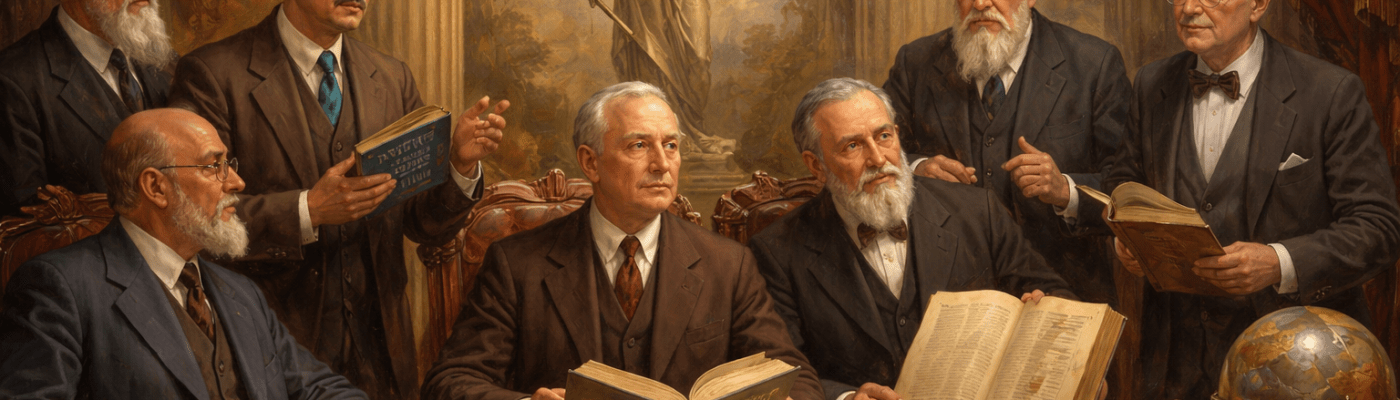
A neo-Austrian framework offers a fresh and accessible evolution of the Austrian School of economics, designed to introduce its core insights to new readers while integrating insights from modern science. Traditional Austrian economics, pioneered by thinkers like Ludwig von Mises, builds upon the foundational idea that humans act purposefully: individuals consciously employ scarce means to achieve chosen ends.
From this starting point, praxeology deduces universal economic laws—such as the principles of marginal utility, opportunity cost, and subjective value—emphasizing how voluntary market exchanges enable coordination without central direction. Neo-Austrianism preserves this deductive rigor and subjectivist emphasis but reframes the axiom of purposeful action as a robust empirical generalization, rather than a purely introspective or strictly a priori truth. It draws supporting evidence from neuroscience, which illuminates brain mechanisms involved in goal-directed behavior, and from qualitative investigations into how people articulate their preferences, attitudes, and intentions.
At the heart of neo-Austrian thought is the recognition that purposeful behavior is demonstrably real and widespread in everyday human experience. People routinely express goals through self-descriptions—whether in conversations, surveys, or interviews—and their actions often corroborate those stated interests, even when influenced by habits, cognitive limits, or unconscious processes. The probabilistic or imperfect nature of these purposes does not diminish their economic significance. Instead, what stands out is the subjective, dispersed, and constantly evolving character of individual purposes. No external observer or authority can fully capture or control this dynamic tapestry of motivations as they shift over time in response to new information, circumstances, and discoveries. This empirical grounding makes the framework intuitive for newcomers: purposeful action is not an abstract philosophical claim but something observable and verifiable through multiple lines of real-world evidence.
This perspective powerfully revitalizes the economic calculation problem, a cornerstone of Austrian critique. Because individual purposes are personal, time-varying, and known most fully only to the acting person, centralized planning or heavy regulation inevitably fails to account for them comprehensively. Market-generated prices serve as a vital discovery process, aggregating scattered knowledge and enabling spontaneous coordination through voluntary trades. When interventions distort these price signals—via controls, subsidies, or monetary manipulation—resources are misallocated, as the link between people’s actual purposes and economic outcomes is severed. Neo-Austrian analysis thus combines empirical documentation of purposeful behavior (from qualitative data and neuroscientific findings) with deductive reasoning to explain why free markets outperform command systems, offering clear predictions about the unintended consequences of intervention.
By treating purposeful action as empirically demonstrable yet still yielding exact logical implications, neo-Austrianism bridges classical Austrian theory with contemporary understandings of human decision-making. It welcomes refinement from behavioral sciences without abandoning the deductive core that gives Austrian economics its explanatory strength. New readers will find this approach particularly valuable because it grounds timeless ideas—like the superiority of spontaneous order and the limits of central control—in observable human reality, making complex economic concepts more relatable and defensible.
Ultimately, neo-Austrianism presents a flexible yet rigorous introduction to free-market thinking for the 21st century. It equips readers to analyze issues such as inflation, regulation, and institutional change by focusing on how individuals pursue their articulated purposes under conditions of scarcity. This synthesis maintains the Austrian School’s commitment to individual liberty and economic truth while opening the door to productive dialogue with neuroscience, qualitative methods, and other empirical traditions. For anyone seeking a deeper understanding of why markets work and why top-down planning does not, neo-Austrianism provides an inviting, evidence-informed pathway into these enduring debates.
 Voluntaryist Association